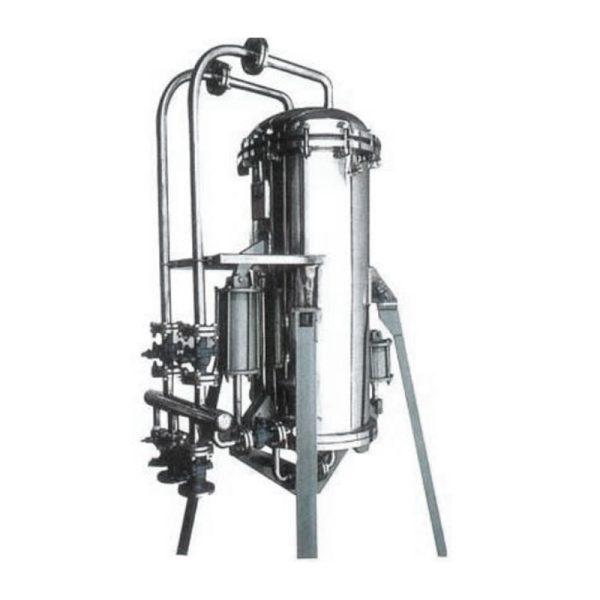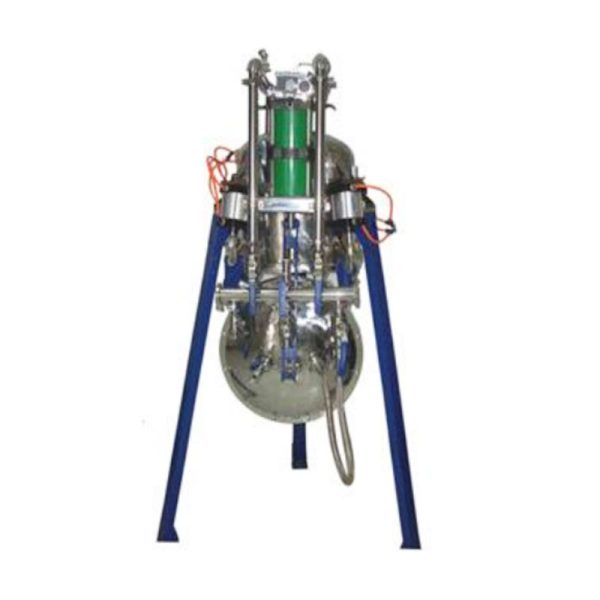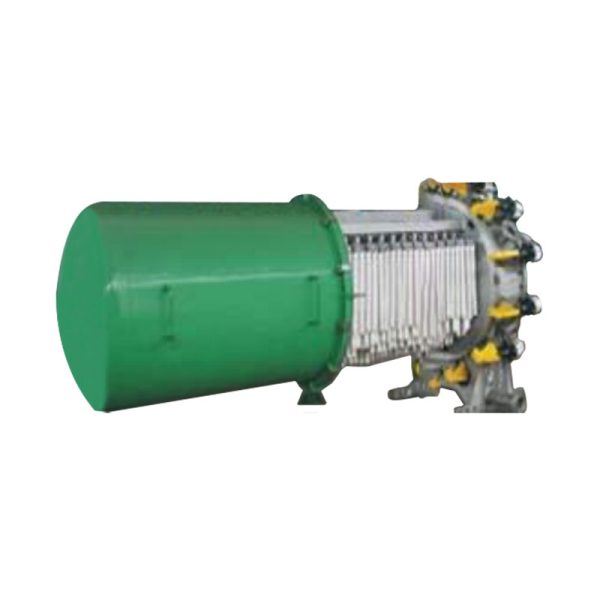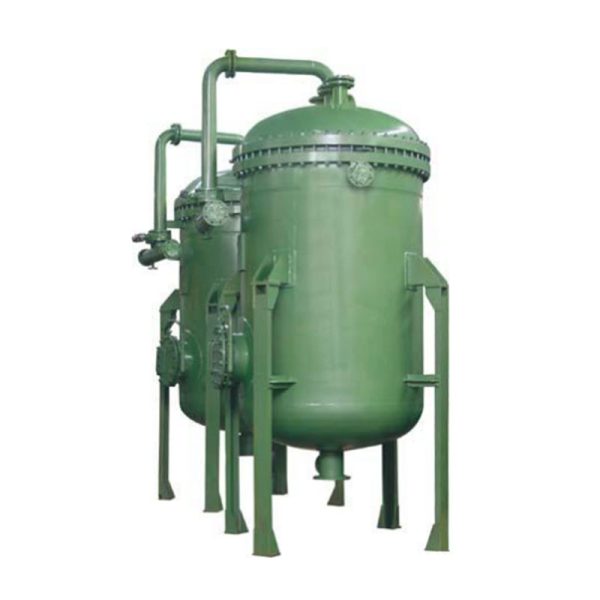
Microbubble Aerator
Many DAF systems suffer from unstable bubbles, low attachment efficiency, high sludge moisture, and rising energy/chemical cost. Microbubble aeration improves bubble–particle contact, shortens flotation time and stabilizes effluent quality.
- Phone:+86-17751233620
- E-mail:ascendiaauto@gmail.com
Key Features:
Key Feature 1 — Stable Microbubble Generation
Creates dense, uniform microbubbles to enhance particle attachment and flotation rate.
Key Feature 2 — Energy-Saving Operation
Optimized gas dispersion reduces air and power consumption compared with traditional coarse-bubble aeration in many DAF retrofits.
Key Feature 3 — Better Oil & TSS Removal
Improves removal performance for oil/grease, suspended solids, and fine flocs—especially under fluctuating influent.
Key Feature 4 — Easy Retrofit to Existing DAF
Compact skid/inline installation; can be integrated with your saturator, recycle loop and dosing system.
Key Feature 5 — Low Maintenance & Anti-Clog Design
Backflush/cleaning-friendly structure to reduce clogging risk and downtime.
(Typical Design Range) :
Bubble size: 0.2–70 μm (typical)
Air supply: plant air / dedicated compressor (by system design)
Integration: DAF recycle loop / saturator / inline microbubble module
Control: manual / PLC interlock with recycle pump & skimmer
Process Characteristics:
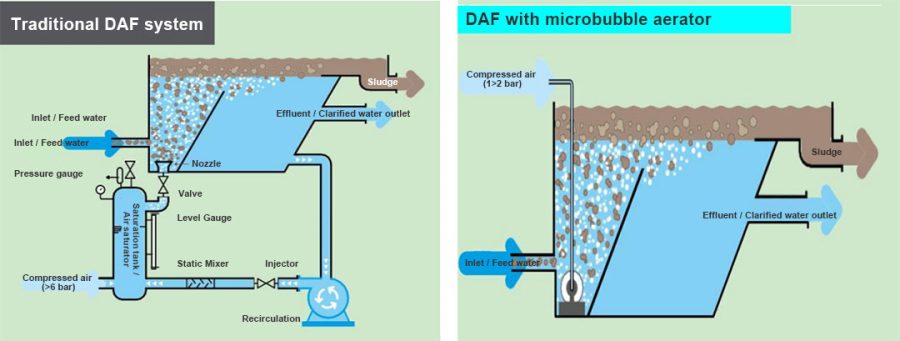
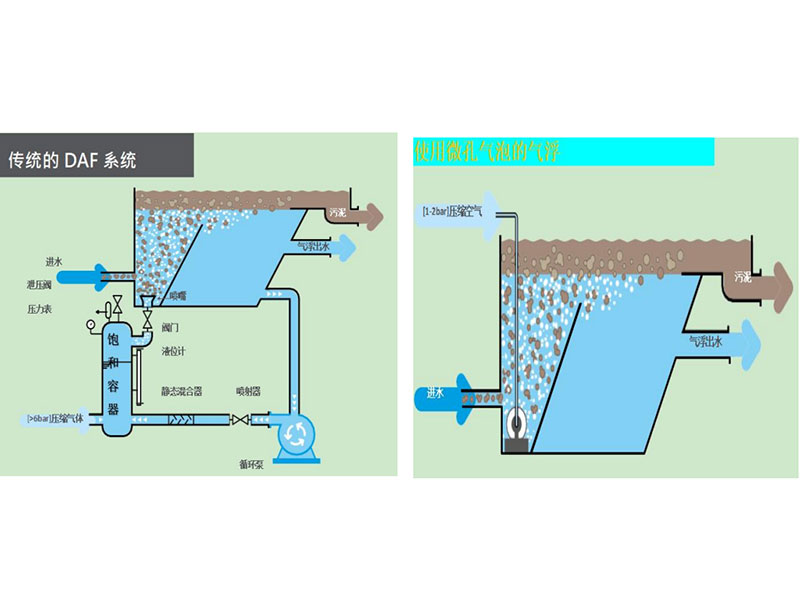
The Microbubble Aerator is used in DAF as the bubble-generation core. Compressed air is dispersed through micro-porous media to form stable microbubbles. These microbubbles attach to flocs/oil droplets, reducing their apparent density and lifting them to the surface for skimming. The system can be configured as part of a recycle/saturation loop or as a dedicated microbubble module depending on the DAF layout.
Typical Industries and Products:
Industrial wastewater: oil & TSS removal before biological treatment
Food & beverage: grease/solids flotation, polishing clarification
Chemical / refinery: oily wastewater, emulsion breaking assist
Municipal/industrial reuse: flotation pretreatment to protect downstream membranes
Working Principle:
Air is supplied by compressor (or plant air) into the microbubble module.
Micro-porous dispersion generates fine microbubbles.
Microbubbles attach to flocs/oil droplets and float them to the surface.
Skimmer removes floated sludge; clarified water exits the tank.
Periodic backflush/cleaning keeps bubble performance stable.
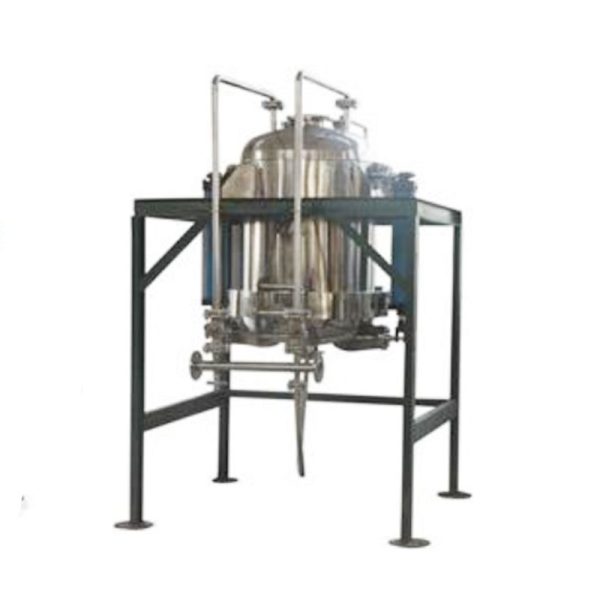
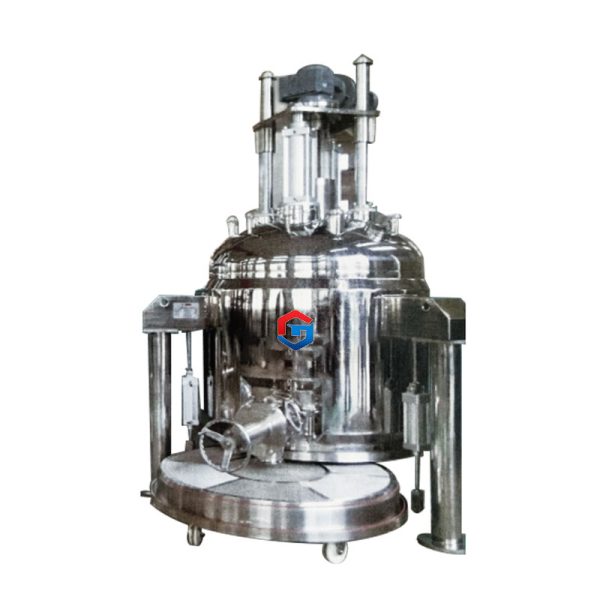
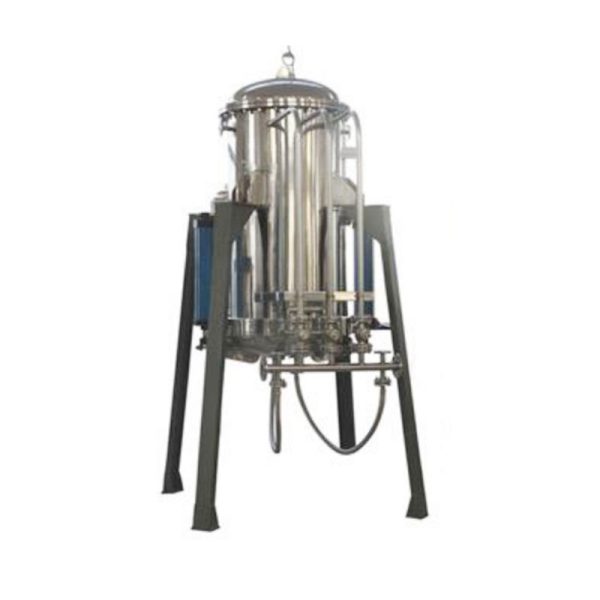
Structure Diagram: