Intelligent and low-carbon upgrade of horizontal centrifuges empowers high-quality production across multiple industries
With the continuous improvement of separation efficiency, product precision, and environmental compliance requirements in industries such as feed processing, petrochemicals, mineral enrichment, and environmental protection governance, the horizontal centrifuge, as the core equipment in the field of solid-liquid and liquid-liquid separation, is breaking through traditional limitations through technological iteration and rapidly developing in the directions of intelligence, low carbonization, and high precision. Industry data shows that the global market size of three-phase separation horizontal decanter centrifuges reached 1.92 billion yuan in 2024, and is expected to maintain an average annual growth rate of 3.9% from 2025 to 2031. The Chinese market, leveraging core technological breakthroughs and robust downstream demand, has become the core engine of global market growth.
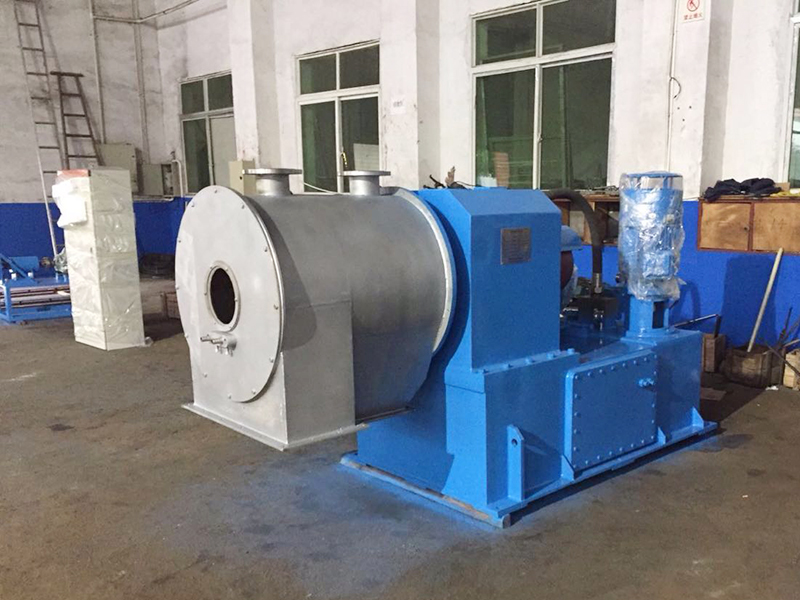
The core of a horizontal centrifuge relies on the differential rotation of the bowl and the spiral feeder to generate centrifugal force, achieving efficient material separation. Compared to traditional equipment such as vertical centrifuges, it has significant advantages such as large processing capacity, stable continuous operation, and a wide range of suitable materials, making it widely applicable to separation scenarios involving high viscosity, large particles, and multiphase mixtures. In recent years, the pain points of traditional horizontal centrifuges, such as insufficient separation accuracy, high energy consumption, and poor environmental sealing, have become key factors restricting industry upgrading. Intelligent transformation and structural optimization have become the core paths to address these pain points.
Technological innovation and patent breakthroughs are advancing in parallel, pushing the horizontal centrifuge industry into a new phase of upgrading. Domestic leading equipment enterprises and scientific research institutions are collaborating closely, making continuous breakthroughs in core areas such as intelligent control, structural design, and energy conservation and consumption reduction, with multiple technological achievements reaching the advanced level in the industry. The fully enclosed high-precision horizontal centrifuge developed by Hebei Chengzhu Machinery Group adopts the "spiral feeding + differential dynamic adjustment" technology, which can adapt to different raw material characteristics in real time, stabilizing the slag content in separation below 0.3%. At the same time, through the application of lightweight drum materials, the energy consumption per unit of processing is reduced by more than 20% compared to traditional models, effectively solving the contradiction between separation accuracy and energy consumption in the feed industry. Jiangsu Dongbang Machinery Co., Ltd. has successfully developed an intelligent variable frequency adjustment system for horizontal scroll sedimentation centrifuges. By collecting parameters such as material concentration and pressure in real time through sensors and relying on the PLC core controller to automatically optimize the speed, it significantly reduces power consumption compared to traditional fixed-speed equipment. The relevant technology has been granted a national patent.
In specialized fields, the research and development of distinctive technologies have achieved remarkable results. Chongqing Binfu Technology has applied for a patent for "a horizontal centrifuge for mineral enrichment" specifically for mineral enrichment scenarios. By optimizing the internal structure and distribution method of the ore dressing cylinder, it has significantly improved the enrichment speed and efficiency of heavy minerals such as gold and platinum, providing an efficient separation solution for the hydrometallurgical industry. Furthermore, the application of dual-stage tandem separation technology has further expanded the application boundaries of equipment, enabling precise separation of fine impurities with a particle size of 2-10μm, reducing the slag content to below 0.2%, and meeting the high purity requirements of high-end pet feed, bio-feed, and other scenarios.
The robust demand across multiple downstream industries provides ample space for the widespread application of horizontal centrifuges. In the field of feed processing, a large pig feed enterprise has introduced the fully enclosed horizontal centrifuge from Hebei Chengzhu. As a result, the feed pass rate has increased from 95% to 99%, with annual electricity savings and quality improvement benefits totaling over 680,000 yuan, and the investment return period is only 12 months. In the fields of environmental protection and petrochemical industry, the three-phase separation horizontal scroll centrifuge, with its efficient separation ability for oil, water, and solid mixtures, is widely used in industrial wastewater treatment, oil and gas exploration waste disposal, and other scenarios, helping enterprises achieve emission standards and resource recycling. In the field of mineral processing, the patented technology of Chongqing Binfu Technology provides efficient equipment support for the recovery of rare and precious metals, further expanding the application scenarios of horizontal centrifuges.
Industry experts indicate that 2025, as the concluding year of the 14th Five-Year Plan, will witness a synergistic effect of tightened environmental policies, capacity upgrades in downstream industries, and the demand for upgrading existing equipment, which will continuously drive the steady growth of the horizontal centrifuge market. In the future, with the deep integration of technologies and equipment such as AI predictive maintenance, carbon fiber lightweight materials, and zero-emission processes, horizontal centrifuges will evolve towards a more intelligent, energy-efficient, and environmentally friendly direction, transitioning from being a single separation equipment to becoming a core component of a full-process solution.
Facing market opportunities, domestic equipment enterprises are accelerating their layout in high-end and customized tracks. By increasing R&D investment in core technologies, improving patent layout, and optimizing after-sales service systems, local enterprises are gradually breaking the monopoly of international brands in the high-end market and promoting import substitution in the separation machinery industry. Industry insiders suggest that when selecting equipment, enterprises should focus on the stability of separation accuracy, the economy of unit energy consumption, and environmental compliance. They should give priority to suppliers with technological innovation capabilities and rich application cases, laying a solid foundation for high-quality development of enterprises through equipment upgrades.