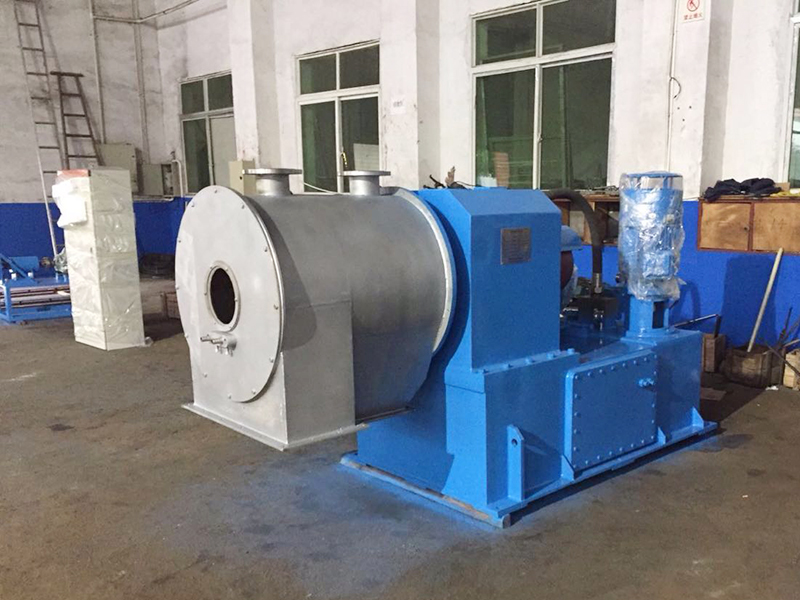
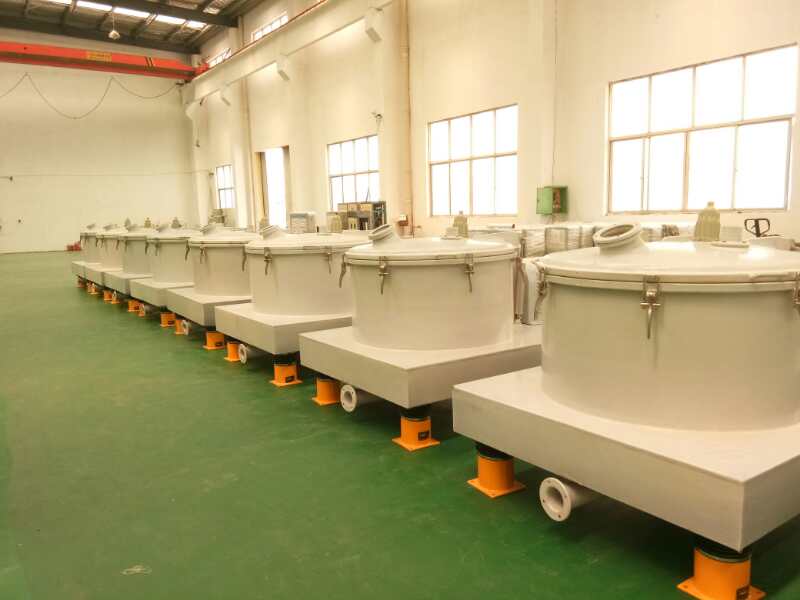
The technological iteration of centrifugal extractors accelerates, laying a solid foundation for efficient separation and green development across multiple industries
As industries such as hydrometallurgy, fine chemicals, and environmental protection treatment continue to shift towards high efficiency, low carbon footprint, and resource utilization, the centrifugal extractor, as a core equipment for liquid-liquid separation, has seen its market demand soar, thanks to its core advantages of rapid mass transfer, low-consumption environmental protection, and intelligent controllability. Industry forecasts indicate that the global centrifugal extraction equipment market will maintain steady growth from 2025 to 2030. The Chinese market, as a core growth pole, is entering a golden period of technological breakthroughs and large-scale applications, driven by both policy incentives and industrial upgrades.
The centrifugal extractor relies on the strong centrifugal force field generated by high-speed rotation to achieve rapid mixing and efficient separation of two immiscible liquids. Compared to traditional extraction equipment, it has significant technical advantages: the mixing and separation time is only 0.5-3 seconds, greatly improving production efficiency; it can effectively suppress emulsification and reduce solvent loss; it supports single-stage to hundreds of stages in series operation, adapting to the full range of needs from laboratory small-scale testing to industrial large-scale production, and performing particularly well in demanding scenarios such as processing complex materials containing impurities, highly corrosive media, and rare metal recovery.
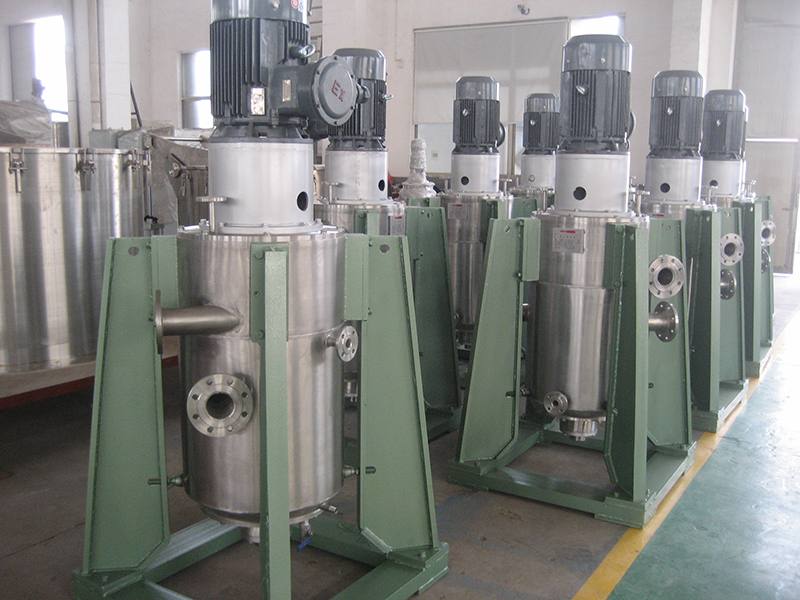
Technological innovation and the synergy of industry, academia, and research have become the core driving force for upgrading the centrifugal extractor industry. Currently, leading domestic equipment enterprises have made breakthroughs in multiple key core technologies, with some products reaching the international advanced level in performance. Shandong Liancui Fluid Technology Co., Ltd. has developed the LC-type centrifugal extractor, which adopts an upper suspension structure and a bottom-bearing-free design. With a rotational speed of 5000-12000rpm, it can generate 1000-10000 times the gravitational centrifugal force. The rotating drum is made of 316L stainless steel or fluorine material, offering a corrosion resistance five times higher than traditional models. Additionally, it integrates an AI process optimization module and a PID temperature control system, allowing real-time adjustment of key parameters such as rotational speed and phase ratio, reducing product purity fluctuations from ±1.5% to ±0.3%. It supports DCS remote monitoring, significantly reducing manual intervention. Jiangsu Zhengfen Technology Co., Ltd., through deep cooperation with universities such as Tsinghua University and East China University of Science and Technology, has made continuous breakthroughs in the design of rotating drum fluid dynamics and intelligent control systems. Its customized equipment and full-chain service solutions have covered multiple fields such as fine chemicals, petrochemicals, and biological fermentation, with products exported to many countries and regions around the world.
The robust demand in downstream industries has provided a vast market space for the widespread application of centrifugal extractors. In the field of hydrometallurgy, this equipment effectively solves the challenges of recovering rare and precious metals such as rhenium from contaminated acid. After a copper smelting plant adopted the Shandong Liancui LC-650 centrifugal extractor, the rhenium recovery rate increased from less than 70% in traditional processes to over 95%, saving over 3 million yuan in annual solvent costs and achieving a VOCs emission concentration below 8mg/m³, thus realizing a win-win situation for both economic and environmental benefits. In the field of environmental protection, its application in industrial wastewater treatment and organic pollutant degradation is becoming increasingly widespread. It can significantly reduce the COD value of wastewater, helping enterprises achieve emission standards and resource recycling. In the fields of fine chemicals and biological fermentation, with its high-efficiency separation and low-pollution characteristics, it provides core equipment support for enhancing product purity and process optimization.
Industry experts indicate that 2025, as the concluding year of the 14th Five-Year Plan, will witness a combination of tightened environmental policies, rapid development of the new energy industry, and the need for upgrading existing equipment, which will continuously drive the steady growth of the centrifugal extractor market. In the future, with the deep integration of technologies such as supercritical extraction and microwave assistance with centrifugal extraction technology, equipment will evolve towards higher efficiency, lower energy consumption, and more intelligent interconnection, upgrading from a single separation device to a core node of process-oriented solutions.
Facing market opportunities, domestic equipment enterprises are accelerating their layout in high-end and customized tracks. By increasing R&D investment in core technologies, improving quality management systems, and optimizing after-sales service networks, local enterprises are gradually breaking the monopoly of international brands in the high-end market and promoting import substitution in the separation machinery industry. Industry insiders suggest that when selecting equipment, enterprises should focus on material characteristics, process requirements, and environmental compliance requirements, and give priority to suppliers with technological innovation capabilities, rich application cases, and full-chain service capabilities. Equipment upgrades can inject strong momentum into the high-quality development of enterprises.